


There are rebuilds and then there are resurrections.
Not long ago, the Patriots were stuck in the kind of spiral that makes a franchise feel tired. They were still riding the Brady-era high but losing enough games can make even the toughest fans feel desperate.
Soon enough, the media was ablaze. “The Patriots Dynasty is over.” Fans were arguing about everything. The roster felt like patchwork. Close games slipped away. Confidence was at an all-time low.
Then came rock bottom: back-to-back 4-13 seasons with no light at the end of the tunnel.
And in the NFL, that kind of performance usually shows that the problems go beyond the football field. You try to focus on the draft, on physically and mentally preparing for the next season. But many teams usually undervalue one of the most critical pieces in building a successful NFL team: the head coach. The Patriots, however, were not one of them.
After a short experiment under Jerod Mayo, the Patriots made the difficult choice to look for a new head coach, soon picking Mike Vrabel to lead the team.
On the surface, it wasn’t a flashy hire. He was just an ex-player (for the Patriots too) and an ex-head coach with enough experience leading a playoff caliber team. But the team felt the change immediately.
Under Vrabel’s new scheme, New England turned the ship around in record time, finishing 14-3, winning the AFC Championship against Denver and going to their 12th Super Bowl appearance (the most of any team in the NFL). How did he do it? Coaches, analysts and fans alike wondered that same question.
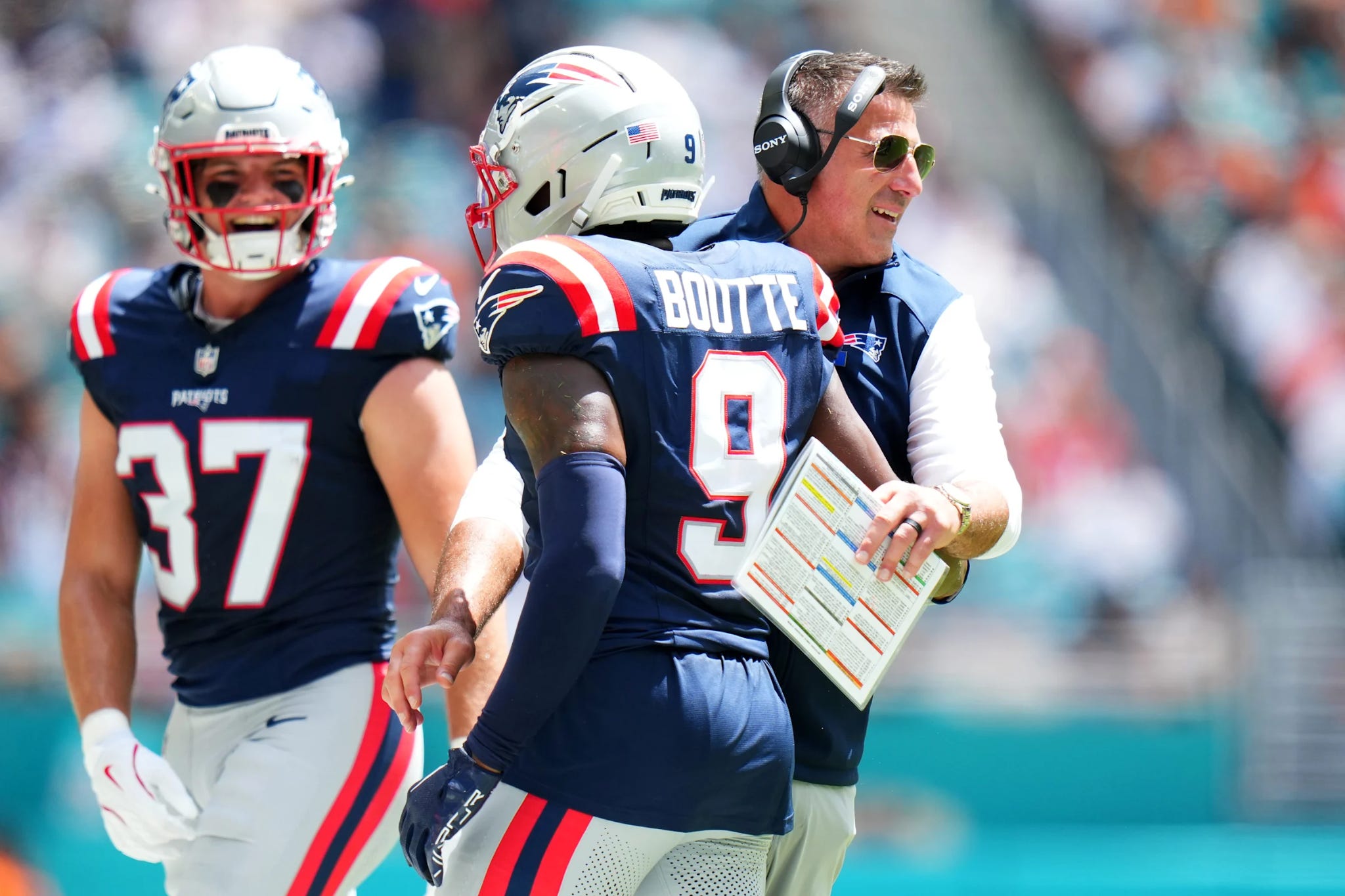
For the Patriots, it was all about consistency. Players described a coach whose message landed because it stayed the same, week after week, rep after rep. Expectations were clear. Effort had a definition. The team stopped feeling like it was searching for an identity and started protecting one.
Vrabel did not need perfect circumstances to change the Patriots’ direction. He worked with what was already there, then raised the level of the daily work around it.
When the message is consistent, motivation becomes easier to access. When practice has purpose, confidence has something real to stand on. When scheming and playcalling fit the roster, players stop guessing and start playing fast. They also bond over their shared experiences on and off the field.
“People ask what non-negotiables are. Our effort and our finish is going to be the contract that we make with our teammates. That will be my job to make sure.”
- Mike Vrabel on his first press conference as the Pats head coach
Vrabel’s first season in New England is a reminder that “changing the trajectory” rarely starts with perfect conditions. It starts with standards that are clear enough to live by, and a leader who cares about the unglamorous layers: how people connect, how they practice, how they respond to mistakes, and how the plan fits the players who actually walk into the building.
The Patriots did not erase the pain of a 4-13 season by pretending it never happened. They built on what they had, tightened the screws, and stacked enough good weeks that belief became reasonable again.
That applies outside football too. A bad season can train you to expect more of the same. It can make you hesitant to try, because you have already seen how the story ends. The hard part is choosing to act like the future is still open, then doing the daily work that proves it.
So now I ask you:
What would change in your life if you treated the next week like a chance to build belief before you can see results?
Coach Vrabel is a great testimony on how coaching is much more than just play calling. Much like Coach Vrabel all of us also have both an emotional role and a practical role in life and in pur jobs. Both are equally important …Go Pats!
Hope for a better future makes you move forward. Never let go. Keep believing. God is in in charge.