


Come back as yourself.
For almost five years, Justin Bieber had not delivered a full live performance. Not the kind where the lights are on you, the pressure is yours, and thousands of people are waiting to see if you still have it.
Then came Coachella 2026.
For Bieber, headlining one of the biggest music festivals in the world was more than another career milestone. It was a reintroduction. After stepping away from touring in 2022 to focus on his health, canceling the remaining dates of the Justice World Tour, and later selling the rights to his catalog through 2021, it felt like a chapter of his career had quietly closed.
But in April 2026, the stage was set for something new.
Bieber had released new music in 2025, his first major wave of songs since Justice. Still, fans were unsure if he was ready to perform again. The excitement around Coachella came with a bit of nervousness. Would he lean into the new era? Would he avoid the old one? Would he try to prove he had moved on?
Instead, he did something more powerful. He accepted the whole story.
During his Coachella set, Bieber performed newer songs while also revisiting parts of the career that made him famous in the first place. The show brought together different versions of him: the teenager discovered on YouTube, the global pop star, the tabloid target, the artist who stepped away, and the man returning on his own terms.
That is what made the comeback feel so human.
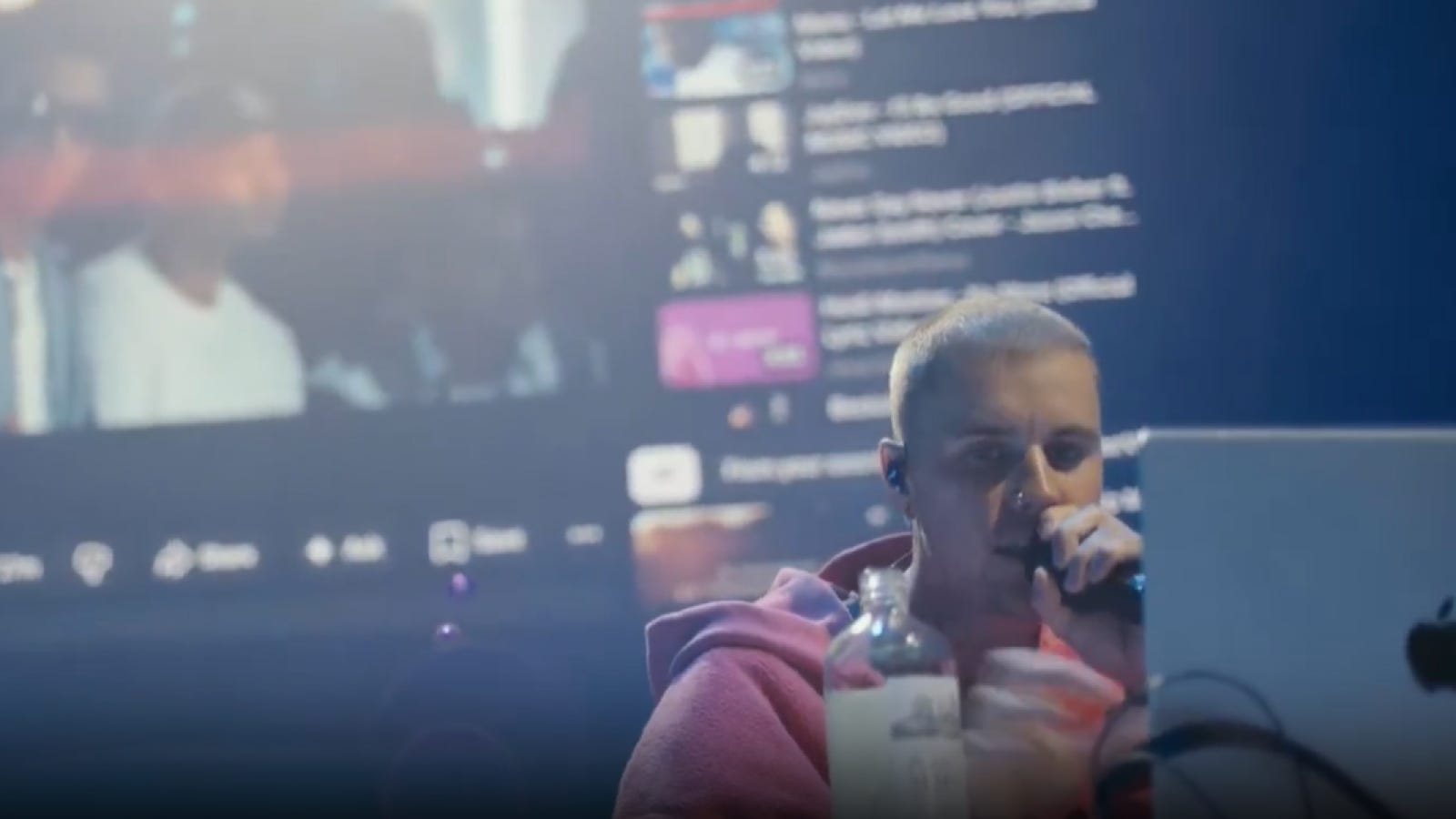
A lot of artists spend their adult lives trying to outrun the version of themselves that made them famous. They distance themselves from the early songs, the old image, the awkward interviews, and the fans who loved them before they were considered “serious.” But Bieber’s performance worked because he did not treat nostalgia like a weakness. He treated it like part of the truth.
And people responded.
After his first Coachella weekend, his catalog reportedly saw a 172% increase in streams, with 17 songs charting on the Billboard Global 200 for the week of April 25. During that same week, Bieber charted seven albums on the Billboard 200 at the same time for the first time in his career. Journals, originally released in 2013, even made its debut on the chart more than 12 years later.
That is the power of nostalgia. It reminds people not only of who an artist used to be, but of who they were when they first listened.
For millions of fans, Justin Bieber was not just a singer. He was a memory. A school dance. A YouTube video. A first crush. A song people pretended to hate but still knew every word to. His comeback worked because it gave people permission to revisit those moments without embarrassment.
But nostalgia alone was not enough. The reason it felt meaningful was that Bieber did not seem trapped by the past. He seemed at peace with it.
“I think I hate myself sometimes when I feel myself start to become inauthentic.”
- Justin Bieber
That quote says a lot.
For most of his life, Bieber has been watched, judged, praised, mocked, and analyzed by people who never really knew him. The world wanted him to be innocent, rebellious, grateful, mature, cool, spiritual, perfect. That kind of pressure can make anyone lose track of who they actually are.
Maybe that is why this comeback felt different. It was not about pretending everything had been easy, or proving he was still the same person from 2010. It was about showing that all those versions could exist in the same story.
His rise began because he was himself before the world told him who to be. A kid singing into a camera, not polished, not strategic, just present. His comeback seemed to work for the same reason. He stopped running from the parts of himself that people had turned into jokes, memories, or headlines, and brought them back with him.
That is a lesson for all of us.
We all have versions of ourselves we try to hide. The younger self who cared too much. The beginner who looked awkward. The dreamer who posted something before anyone was watching. The phase we now call cringe because it feels easier than admitting it mattered.
But maybe those versions do not need to be buried. Maybe they need to be accepted.
Growth does not always mean becoming unrecognizable. Sometimes it means looking back at who you were, forgiving that person, and realizing they helped you get here.
So now I ask you:
What younger version of yourself are you still trying to hide, and what would change if you finally welcomed them back?
I like that everything was just memories
Wowowow. This is really a vey useful story in today's life since the pressure we all feel threatening who we really are. It requires strength to do what we feel is right because that is what we are and not what people would love us to be. This is a great learning to focus on making reflection about our decisions with this thoughts in mind. Thanks.