


Sometimes, the bravest thing you can do is nothing.
About a month into her job at the FDA, an application landed on Kelsey’s desk for a sedative called thalidomide. It was already being sold in more than 20 countries and praised as a wonder drug for anxiety and morning sickness in pregnant women. Colleagues assumed it would be an easy approval.
But when Kelsey read the file, something didn’t sit right. The company’s confidence was sky-high, yet the data was thin. There were enthusiastic testimonials, but not the kind of rigorous studies she wanted to see, especially for a drug meant to be taken repeatedly by pregnant women.
Her instincts told her to slow down. Instead of signing off, she asked for more information. Under the rules at the time, any request for more data reset the 60-day clock that would otherwise grant automatic approval. So she kept asking, and the company kept pushing back.
Executives complained she was being difficult and blocking a useful product. Other countries were already prescribing it, they insisted, why was a recently-hired doctor at the FDA holding things up?
Still, Kelsey refused to move without better evidence. Then, in late 1961, reports from Europe linked thalidomide to a wave of babies born with missing or severely deformed limbs. A drug marketed as safe for pregnant women was causing catastrophic birth defects.
Because Kelsey had never approved it, the United States avoided the worst of the crisis. Some samples had been distributed in testing, so a small number of American families were harmed, but the nationwide disaster seen elsewhere never took hold. One person’s refusal to be rushed made the difference.
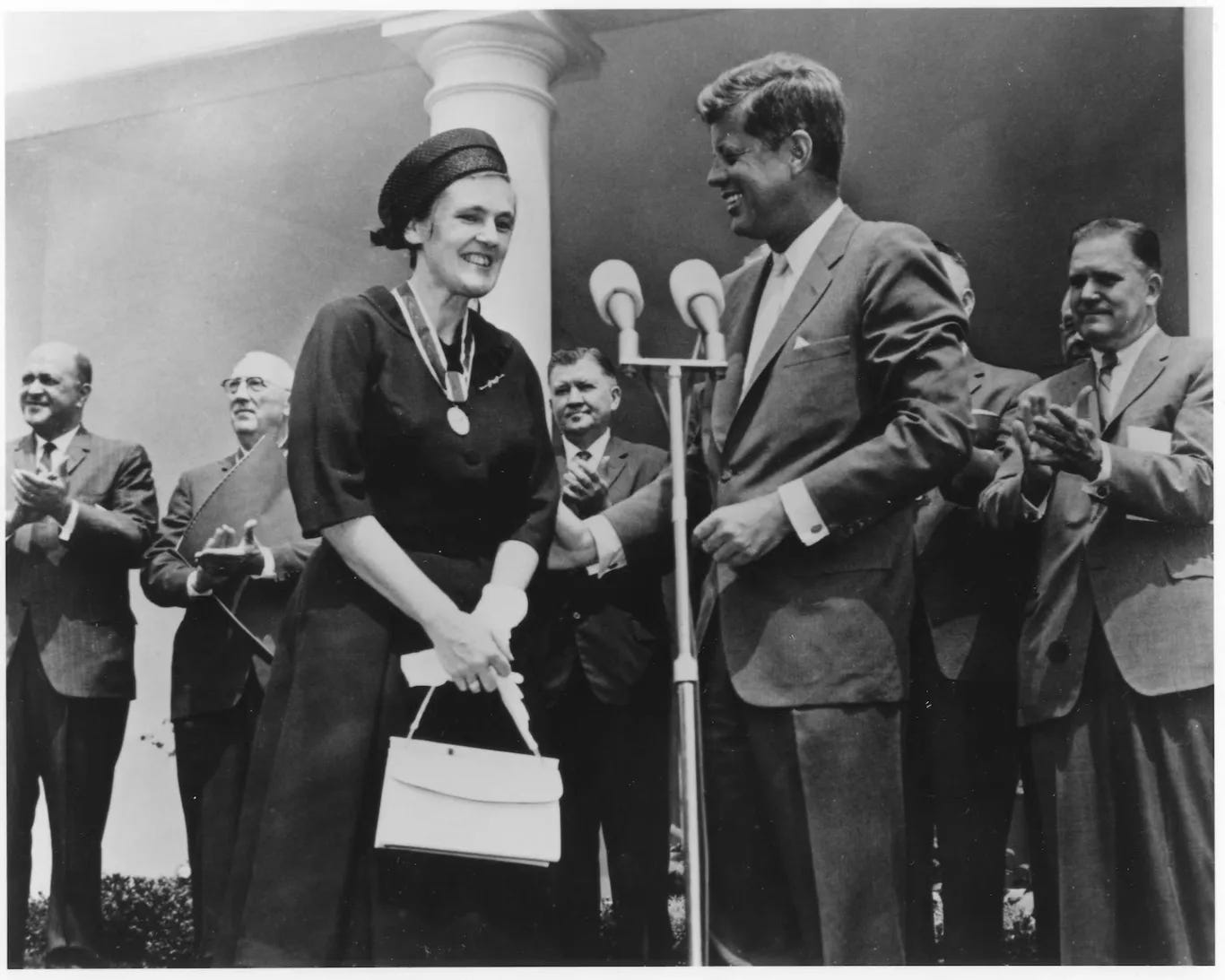
Thanks to her bravery, many Americans were spared from the crisis that plagued other countries. It was this act that led to her being awarded with the President’s Award for Distinguished Federal Civilian Service from President John F. Kennedy in 1962.
At a White House ceremony later, President John F. Kennedy summed up what she’d done in a single line:
“Her exceptional judgment in evaluating a new drug for safety for human use has prevented a major tragedy of birth deformities in the United States.”
It’s not flowery. It’s not dramatic. It’s just precise.
“She’s the embodiment of someone who took her responsibilities seriously and impacted not just Americans, but people worldwide through the regulatory structure that emerged from her.”
- Leslie Ball, Kelsey’s successor at the FDA.
It’s easy to imagine courage as something loud and dramatic. But Kelsey’s courage looked like paperwork, phone calls, and polite, repeated “no’s” from a small office in a government building.
Everyone around her had reasons to move fast. The company wanted profits. Doctors wanted something new to offer. Regulators were used to trusting whatever landed on their desk. All Kelsey had was a feeling that the evidence didn’t match the promises, and the self-respect to treat that feeling as a warning, not a nuisance.
Most of us won’t ever stop a global medical disaster. But we will face smaller versions of the same test. A manager pressuring you to sign off on something that feels wrong. A professional dismissing your concerns about your health or safety. A group insisting, “Don’t worry, everyone does this,” while your stomach tightens.
In those moments, it’s tempting to silence your inner voice and tell yourself you’re being dramatic. But Kelsey’s “drama” didn’t just save lives in the short term; it helped reshape drug regulations so that companies had to prove safety and effectiveness, and patients’ rights in trials were better protected. A whole system shifted because one person trusted her judgment under pressure.
Trusting your gut doesn’t mean ignoring science or facts. It means paying attention when the facts are missing, weak, or being rushed past you, and having the courage to say, “Not yet.”
So now I ask you:
Where in your own life do you feel that quiet internal resistance, and what might happen if, like Frances Kelsey, you trusted it enough to hold the line?
Everyone should take his or her work very seriously. That is the only way the world will keep running in the right direction.
Always follow your instincts