


Branding matters.
In the late 1990s, Microsoft was quietly building something it had never shipped before: a gaming console.
Inside the company, it didn’t start with a bold brand. It started like most hardware projects did back then: with placeholders and clunky labels that sounded like they belonged on a spreadsheet.
Names like “Windows Entertainment Project” and other acronym-heavy options floated around, the kind of thing that felt safe in an era when tech products often sounded like corporate initiatives.
But the engineers had their own shorthand. The machine was built around Microsoft’s DirectX tech, so “DirectX Box” became a natural internal nickname. Then, as these things always go, “DirectX Box” got shortened in emails and hallway conversations until it was just “Xbox.”
To the people building it, Xbox had energy. It sounded sharp. It sounded like play. To the marketing team, it sounded like a mistake.
They didn’t just dislike it. They thought it was the worst possible option, the kind of name you get stuck with when nobody is paying attention. They pushed for alternatives like “11-X” or “Microsoft Interactive Center” trying to steer the product toward something that felt more polished, more “proper.”
And here’s where the story gets interesting. Marketing decided to do what any confident team would do when they believe they already know the answer: they tested it.
They put all of their name options (including “Xbox”) into focus groups and consumer surveys as a kind of control, expecting people to reject it. The goal was simple: collect proof that their instincts were right, then move on to a “better” name with everyone aligned.
Instead, the data did something else. People liked Xbox. A lot.
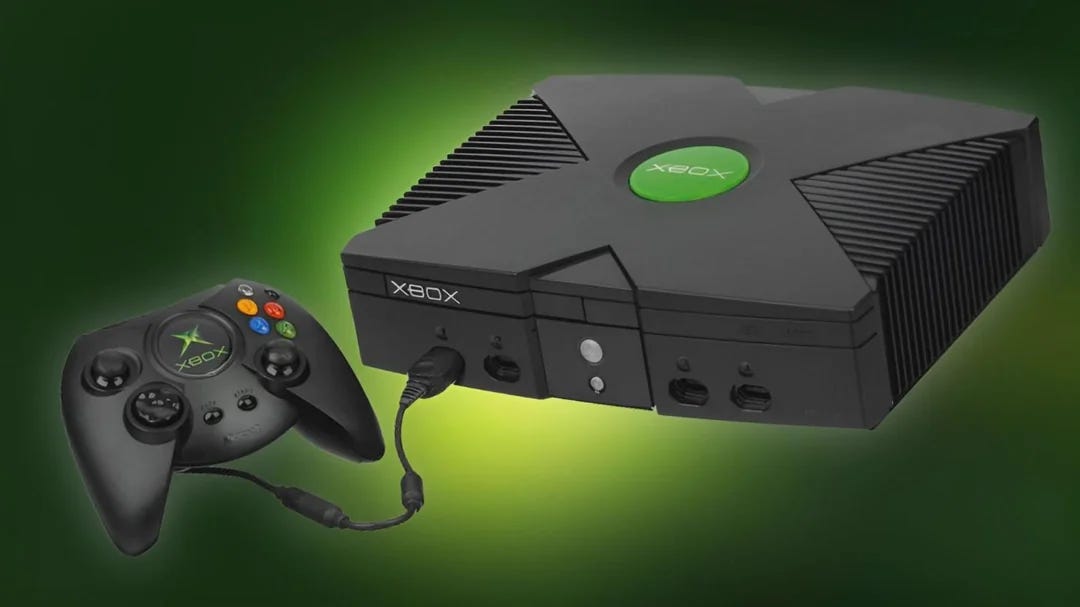
Out of the pile of “more sensible” options, the name they expected to bomb came out on top. The result was a direct hit to a very human bias: the belief that our taste is the market’s taste.
And that is how the original Xbox got its name. Not because marketing loved it. Not because it was the most elegant idea in the room. But because the customers voted, and reality won.
“Phase four was a battle between us and the naming guys, when we decided we just wanted to risk it and go with Xbox… They wanted, for some unknowable reason, to call it ‘11-X’ or ‘Eleven-X’.”
- Seamus Blackley, creator and designer of the original Xbox.
It’s tempting to treat this story as a funny bit of tech trivia, like, “Can you believe they almost named it that?” But the real lesson is bigger than gaming.
Because the Xbox naming saga is a clean example of what data is supposed to do in good decision-making: it interrupts certainty.
When you are building something important, especially something public, your internal opinions are not enough. Even smart people with great instincts still live inside a bubble of experiences, tastes, and assumptions. And the more confident you feel, the more dangerous that bubble becomes.
That’s why objective feedback matters. Not as a formality, not as a checkbox, but as a guardrail.
Sure, you do not need to run a survey to decide what to have for lunch. Most decisions are reversible. Most mistakes are small.
But naming a flagship product is not small. It’s identity. It’s packaging. It’s first impressions. It’s what people say to their friends, what they type into search bars, what they remember years later. In moments like that, data-driven decisions are not overkill. They’re the cornerstone.
And maybe the deeper takeaway is this: the point of testing is not to prove you are right. It’s to find out if you are wrong, while you still have time to change course.
Microsoft’s marketing team put “Xbox” on the list expecting to bury it. Instead, they discovered it was exactly what the audience wanted.
So now I ask you:
Where in your life or work are you relying on “what feels right,” when a little real-world data could save you from a costly blind spot?
Interesting facts about marketing. It is a science.
This is really something important in life since life is full of surprises and changes and it is common that our beliefs are not what we should do. I find that marketing decisions at work must benefit from some data feedback to make them more effective. Thanks